


IRP Registration Services:
The Complete Guide to Apportioned Plates, Renewals, Transfers & Title Changes.
Running a fleet across state lines without proper IRP registration is one of the fastest ways to invite roadside violations, frozen plates, and lost revenue. If you operate commercial vehicles in more than one jurisdiction, IRP registration isn't optional paperwork you can push to next quarter; it's the legal backbone of your interstate operation. Whether you're a first-time owner-operator applying for your first apportioned plate or a fleet manager juggling renewals, additions, and title transfers across a dozen trucks, understanding how IRP registration actually works can save you thousands of dollars in penalties and weeks of downtime.
This guide walks through everything trucking businesses need to know about IRP registration from the base plate application process to 45-day temporary permits, additions and transfers, and the often-overlooked title transfer requirements that trip up even experienced carriers.
What Is IRP Registration and Why It Matters
The International Registration Plan, commonly shortened to IRP, is a reciprocity agreement among U.S. states (excluding Alaska, Hawaii, and the District of Columbia) and Canadian provinces that allows commercial vehicles to travel across jurisdictional lines under a single apportioned plate. Instead of registering separately in every state you drive through, IRP registration lets you pay registration fees based on the proportion of miles you actually travel in each jurisdiction.
Think of IRP registration as a single passport for your truck instead of a stack of individual visas. A carrier based in Kentucky who regularly hauls freight into New York, Ohio, and Indiana doesn't need four separate state registrations; one apportioned plate covers all of it, with fees distributed according to mileage reported in your application.
For any motor carrier operating a qualified commercial vehicle generally defined as a truck, truck tractor, or combination with a gross vehicle weight over 26,000 pounds, or any vehicle with three or more axles regardless of weight, IRP registration is a legal requirement, not a convenience. Operating without it, or with an expired apportioned plate, can result in fines, impoundment, and disruption to delivery schedules that damage carrier relationships.
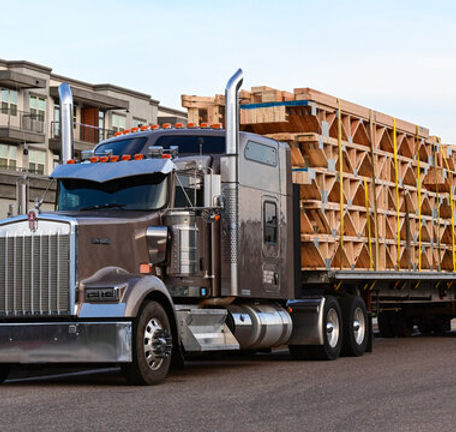

How IRP Apportioned Plate Registration Works.
The core of IRP registration is the apportioned plate application, filed through your base jurisdiction, typically the state where your business is physically established and where your vehicles are principally garaged. The application requires you to report your fleet's total distance traveled in each member jurisdiction during the preceding year, along with vehicle details like VIN, weight, axle configuration, and ownership documentation.
Once approved, your base jurisdiction issues an IRP cab card and apportioned plate that's valid across all participating states and provinces. The cab card lists every jurisdiction you're authorized to operate in along with the corresponding weight allowances, and it must be carried in the vehicle at all times. A missing or expired cab card during a roadside inspection is treated the same as having no registration at all.
New entrants applying for IRP registration for the first time often underestimate how document-heavy the process is. You'll typically need proof of a USDOT number, proof of residency or business establishment in the base jurisdiction, vehicle titles, a Schedule A/C listing all vehicles, and in many cases a completed IFTA application filed alongside it since the two systems are closely linked. Errors in mileage reporting or vehicle classification are the single biggest cause of application delays.
An operations consultant who has spent over a decade helping carriers navigate multi-state compliance put it plainly: "Most IRP rejections aren't about the carrier doing anything wrong intentionally; they're about mismatched data between the title, the VIN, and the mileage schedule. Get those three things aligned before you submit, and approval moves fast."
The 45-Day Temporary IRP Permit: A Practical Bridge
Fleet growth doesn't always wait for paperwork. If you've just purchased a truck, added a vehicle mid-quarter, or are waiting on your full IRP registration to process, a 45-day temporary IRP permit lets you legally operate that vehicle across jurisdictions while the permanent apportioned plate application is finalized.
This temporary authority is especially valuable for owner-operators bringing on a second truck or fleets scaling quickly to meet contract demand. Instead of parking a newly acquired vehicle for two or three weeks waiting on plates, the 45-day temporary IRP registration keeps revenue moving. It's issued by the base jurisdiction, covers the same reciprocity benefits as a full apportioned plate, and must be renewed or converted to permanent registration before it lapses.
A mini case study illustrates why this matters: a mid-size carrier in Kentucky added three refrigerated trailers and two trucks ahead of a produce-hauling contract. Rather than waiting on standard IRP processing timelines, the fleet secured 45-day temporary IRP permits for each vehicle, allowing drivers to begin interstate runs within 48 hours. By the time the temporary permits expired, permanent apportioned plates were already in hand zero downtime, contract fulfilled on schedule.
IRP Addition, Transfer, and Renewal: Keeping Your Fleet Compliant
Fleets are living entities; trucks get added, sold, swapped, and retired constantly. Each of these changes triggers a specific IRP action.
IRP addition applies when you're bringing a new vehicle into an existing fleet registration. Rather than filing a brand-new application from scratch, you're amending your current IRP account to include the additional unit, along with its VIN, weight class, and jurisdictional mileage estimates.
IRP transfer comes into play when a plate is moved from one vehicle to another, commonly when a truck is sold or retired and replaced. Instead of surrendering the plate and reapplying, a transfer allows the existing apportioned plate credentials to move to the replacement vehicle, which is typically faster and can carry prorated fee credits depending on your base jurisdiction's rules.
IRP renewal is the annual process every apportioned carrier must complete before their registration period ends. Renewal requires updated mileage reporting for the prior year across all jurisdictions you operated in, and missing the renewal deadline means your plates become invalid the moment the registration period closes, leaving trucks legally unable to cross state lines until the renewal is processed.
Carriers who treat IRP renewal as a set-it-and-forget-it annual chore often get caught off guard by mileage discrepancies. If your actual operating pattern shifted, say you picked up more freight lanes into Oregon and New Mexico than the prior year,r your renewal filing needs to reflect that, or you risk an audit flag down the line.
Title Transfer: The Step Carriers Often Overlook
When a commercial vehicle changes ownership, whether through a private sale, dealer purchase, or intra-fleet transfer between business entities, the title transfer has to be completed correctly and in sync with the IRP registration update. A mismatch between the titled owner and the IRP account holder is one of the most common reasons cab cards get flagged during audits.
Title transfer for commercial vehicles typically requires the bill of sale, lien release if applicable, odometer disclosure, and the previous title properly endorsed. For vehicles crossing state lines as part of a purchase, for instance, a truck bought in one state but based and registered in another, the title transfer process needs to account for both the selling state's requirements and the base jurisdiction's IRP documentation standards.
Skipping or delaying a title transfer doesn't just create a compliance gap; it can stall your IRP addition or transfer application entirely, since most IRP offices require proof of clear title before issuing or amending apportioned plates.
Common Mistakes That Delay IRP Registration
01
Even experienced fleet operators run into avoidable snags. The most frequent issues include submitting mileage schedules that don't match fuel tax (IFTA) filings, VIN discrepancies between the title and application, incomplete Schedule C vehicle listings, and failing to update the base jurisdiction when a company relocates its principal place of business.
02
Another overlooked detail: insurance certificates and USDOT authority must be active and match the business name exactly as it appears on the IRP application. A slight naming inconsistency with an LLC suffix missing, for example can bounce an application back for correction, adding days or weeks to processing.
Title Transfer: The Step Carriers Often Overlook
When a commercial vehicle changes ownership, whether through a private sale, dealer purchase, or intra-fleet transfer between business entities, the title transfer has to be completed correctly and in sync with the IRP registration update. A mismatch between the titled owner and the IRP account holder is one of the most common reasons cab cards get flagged during audits.
Title transfer for commercial vehicles typically requires the bill of sale, lien release if applicable, odometer disclosure, and the previous title properly endorsed. For vehicles crossing state lines as part of a purchase, for instance, a truck bought in one state but based and registered in another, the title transfer process needs to account for both the selling state's requirements and the base jurisdiction's IRP documentation standards.
Skipping or delaying a title transfer doesn't just create a compliance gap; it can stall your IRP addition or transfer application entirely, since most IRP offices require proof of clear title before issuing or amending apportioned plates.
Why Professional IRP Registration Support Pays Off
01
Handling IRP registration in-house is possible, but the administrative burden compounds quickly once a fleet grows past a handful of trucks. Between initial apportioned plate applications, 45-day temporary permits for new acquisitions, ongoing additions and transfers, annual renewals, and title transfer coordination, IRP management becomes a near-constant task rather than an annual event.
02
Working with a service that specializes in IRP registration means mileage schedules are cross-checked against IFTA filings before submission, documentation errors are caught before they cause rejections, and renewal deadlines are tracked proactively instead of reactively. For growing fleets, that translates directly into fewer roadside compliance issues and less time spent on hold with state DMV offices.
What We Offer
Our Comprehensive Services
From registration and compliance to dispatch, insurance, and fleet management, Quality Logistics Solutions provides reliable, end-to-end trucking support for owner-operators, fleets, and transportation businesses across the USA & Canada.
IRP (Apportioned Plate Registration)
Stay compliant with fast and accurate IRP (Apportioned Plate) Registration services for interstate trucking operations across the USA and Canada.
Title Transfer
Simplify your vehicle title transfer with accurate, hassle-free processing to ensure fast ownership updates and full compliance with state regulations.
45-Day Temporary IRP
Get your 45-Day Temporary IRP permit quickly with expert assistance, keeping your commercial vehicles legally on the road while your permanent.
IRP Addition / Transfer / Renewal
Keep your fleet compliant with fast and accurate IRP additions, transfers, and renewals, ensuring uninterrupted interstate operations and hassle-free registration.
Frequently asked questions
Final Thoughts
IRP registration isn't a one-time checkbox; it's an ongoing compliance relationship between your fleet and every jurisdiction you operate in. From the initial apportioned plate application through 45-day temporary permits, additions, transfers, renewals, and title transfer coordination, each piece has to stay accurate and current to keep trucks moving without interruption. Fleets that stay ahead of IRP registration requirements spend less time dealing with roadside issues and more time on the road generating revenue.
If your business needs support managing IRP registration, renewals, or vehicle title transfers across multiple states, our team handles the paperwork, deadlines, and jurisdictional details so your trucks stay compliant and on schedule
In-Store Help
Click here to edit the text and add your own content to this paragraph.
Same-Day Delivery
Click here to edit the text and add your own content to this paragraph.
Online Orders
Click here to edit the text and add your own content to this paragraph.
24/7 Support
Click here to edit the text and add your own content to this paragraph.
